
In the current global economy, the most expensive word in a leader's vocabulary is "manual". As we enter 2026, the gap that separates "Reinventors" who harness the power of AI, and traditional organizations bound by legacy, is no longer a rift —it is a canyon." Data from the industry has shown a shocking truth: “Almost 41% of IT budgets are spent on the 'interest payments' of technical debt.” This is not solely about legacy code; this is the price for what happens when humans are relied upon to scale areas that simply cannot scale. At our firm, we believe that for a software startup to thrive, we must help our clients flip this script—converting "maintenance costs" into innovation capital through a strategy of total automation.
The Binary Big Bang: When Legacy Becomes a LiabilityThe "Binary Big Bang" refers to the explosive moment when the sheer volume of data and the speed of AI evolution render traditional manual operations obsolete. Organizations that continue to rely on human intervention for routine updates, data cleaning, and system monitoring are hitting a "complexity ceiling."
In this era, technical debt is no longer just an IT inconvenience; it is a strategic risk. When 40 cents of every dollar spent on technology goes toward keeping the lights on in aging systems, the organization is effectively subsidizing its own obsolescence. We follow Total Enterprise Reinvention, which argues that every part of the business needs a "Digital Core" that is automated by default, not by exception.

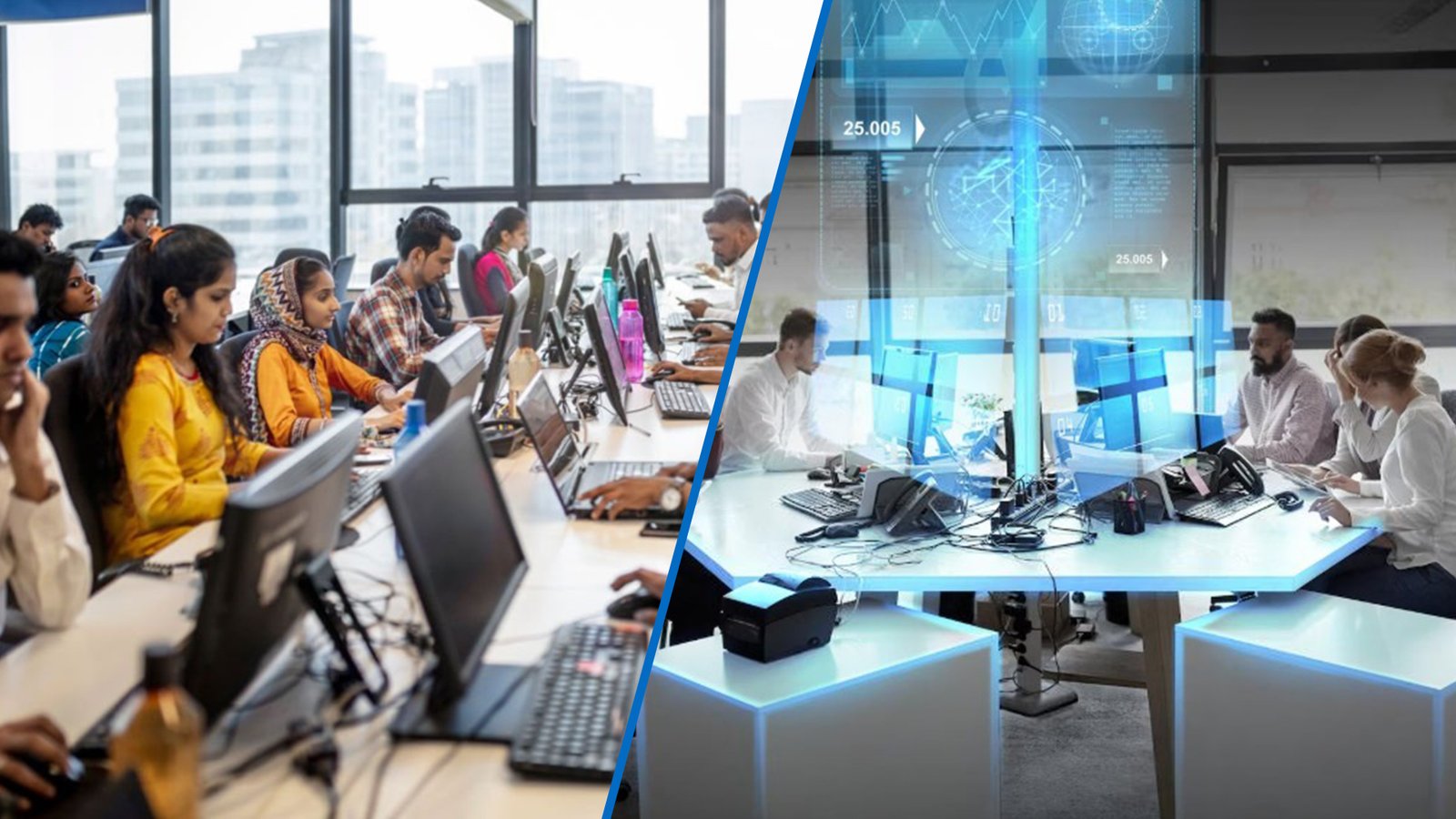
Rebalancing the Ledger: Converting Building Maintenance into Momentum
To free up budget from the manual process, the leadership needs to tune its lens to the "Value Reinvention" process, rather than looking through the "cost-cutting" lens. Conventional methods for cost-cutting may not be effective, as instead of cutting people or licenses, they continue to deal with the same, albeit manual, process.
- • Agentic Modernization: Leverage AI agents for crawling, publishing, and refactoring the code in real time to minimize the concept of "human tax."
- • Autonomous Operations: Moving from a position where operations are completed with a “Human-in-the-loop” process to
- • Zero Latency Workflows: Remove "delay tax" through automated hand-offs between departments to enable data to flow at the speed of thought.
- • These "run" activities are automated so that the capital required for "build" activities, or high-growth AI initiatives that determine the market leaders in 2026, is freed up.
A Future-Ready Operating Model views AI adoption through the lens of the "digital colleague." In an operating model like this, the "tail" complexity is done by automation for 80%, while you retain the 20% of the high-impact decisions for yourself and leave them to the experts you hire for the creative and complex problem-solving that they are capable of doing, and for which you hire them in the first place.
Strategic Pillars for the Autonomous Enterprise
For firms that are ready to reclaim their budget for innovation, we propose the following four-step roadmap:
Quantify exactly how many hours your talent spends on maintenance versus new value creation
Break the shackles of Legacy IT and transform into a plug and play model, using APIs
Encourage teams to be rewarded not for what they get done, but for what they can avoid doing by hand
Utilize agentic AI agents to coordinate complex workflows involving several steps that must be completed without human intervention
Conclusion: The New Performance Frontier
The decision in 2026 is simple: either you pay for the past or invest in the future. Total automation is the only force strong enough to interrupt the cycle of technical debt and free up the 41% of capital that is locked away in the past through legacy costs. As a startup built on the expertise of the modern IT world, we don't just build software; we architect the systems that allow businesses to out-pace, out-innovate, and out-perform their competition.
Related Insights
Research Paper
The Efficiency Dividend: Using Agentic AI to Turn Operational Debt into Market Share
In the global race for digital dominance, most companies are unknowingly driving with the handbrake on. At Intellizo Softwares, we see it every day:
Expand →Research Paper
The 10x Developer & The AI-First Team Redefining "Human + Software" Excellence
For decades, the software industry has been governed by a simple, linear equation: More features = More developers x More hours.
Expand →Research Paper
From Debt to Value: Reclaiming the 41% of IT Budget Lost to Manual Legacy
In the current global economy, the most expensive word in a leader's vocabulary is "manual". As we enter 2026, the gap that separates "Reinventors" who harness the power of AI,
Expand →Research Paper
Architectural Alignment Strategies
for Modern IT Infrastructures
This research studies how aligning system architecture with organizational workflows reduces operational complexity and failure points.
Expand → Go to Web Development Page →Research Paper
A Modular Approach to High-Performance Web Application Engineering
Our analysis examines how different web frameworks behave under varying loads and integration conditions.
Expand → Go to Web Development Page→Research Paper
Converged Interaction Models for Multi-Screen Application Environments
This study compares interaction patterns across handheld and large-screen devices to understand how users adapt between them.
Expand → Go to Mobile and Smart TV App Page →Research Paper
Operational Impact of Embedded AI Models in Existing Software Systems
The research evaluates how custom AI models behave when integrated with operational business systems.
Expand → Go to AI Integration Page →Research Paper
Sensor-Assisted Indoor Positioning: A Framework for Real-Time Spatial Intelligence
This study analyzes the performance of WiFi, UWB, and mapping-based systems for indoor navigation accuracy.
Expand → Go to Indoor Navigation Page →Research Paper
Practical Implementations of Distributed Ledger Systems in Enterprise Workflows
The research investigates how smart contracts, tokenization, and blockchain networks can improve auditability and process automation.
Expand → Go to BlockChain Page →